
A low flow showerhead is one of the cheapest ways to cut water and energy use in any building. The catch is that a bad one gets complaints fast, and a showerhead people hate tends to come off the wall. This guide covers flow rates, water pressure, spray types, accessibility rules and the features that matter when you're buying for a whole property, so you can pick heads that save water and stay installed.
What Is a Low Flow Showerhead?
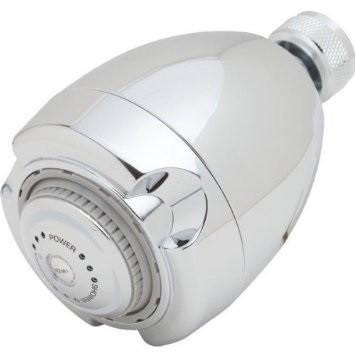
A low flow showerhead is any showerhead that uses less water than the federal maximum of 2.5 gallons per minute (gpm). Most models sold today run between 1.25 and 2.0 gpm, and the better ones are designed so the lower flow is hard to notice.
How a Low Flow Showerhead Uses Less Water
Every showerhead has a flow restrictor, a small disc or insert at the inlet that limits how much water gets through. Low flow heads use a tighter restrictor and then make up for it with the design of the face. Some push water through smaller nozzles at higher speed, and others mix air into the stream so the spray feels fuller than the gallons would suggest.
Federal, WaterSense and State Flow Limits
The 2.5 gpm federal limit dates back to the Energy Policy Act of 1992 and is measured at 80 psi. The EPA's WaterSense label goes further. A WaterSense showerhead has to run at 2.0 gpm or less, still deliver at least 60% of its rated flow at a low 20 psi, and pass tests for spray force and coverage. Those last two tests are the reason the label is worth looking for, since weak spray and poor coverage are exactly what people complain about with cheap low flow heads.
Several states set their own lower limits. California, Washington and Hawaii cap new showerheads at 1.8 gpm, and states including Massachusetts, New Jersey and Maryland cap them at 2.0 gpm. If you manage properties in more than one state, buying to the strictest limit lets you use one model everywhere.
How Much Water Does a Low Flow Showerhead Save?
Showering accounts for nearly 17% of indoor water use in the average home, according to the EPA. The agency estimates that a typical family can save about 2,700 gallons a year just by switching to WaterSense showerheads.
Savings per Shower and per Year
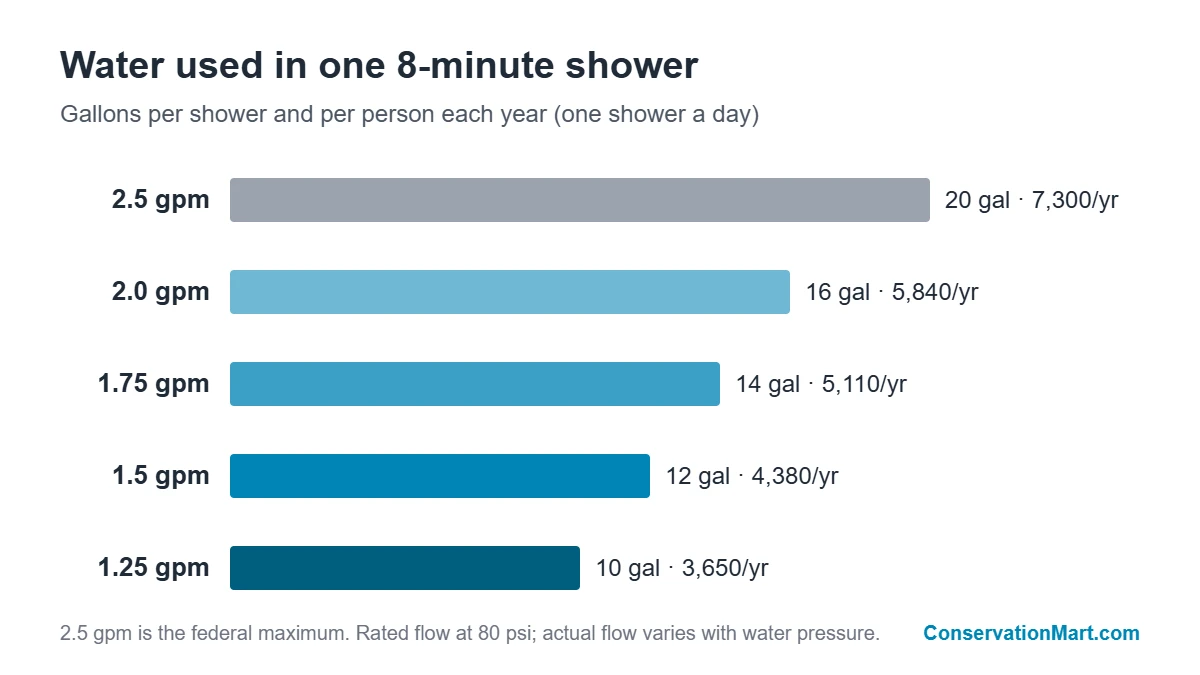
The math is simple: gallons saved per minute times minutes in the shower. Going from a 2.5 gpm head to a 1.5 gpm head saves one gallon every minute the water runs. With one 8-minute shower a day, that comes to 8 gallons a day, or about 2,900 gallons a year for each person.
Hot Water and Energy Savings
Most of the water that goes down a shower drain was heated first, so using less of it also cuts the energy your water heaters burn. The EPA puts the savings for an average family at more than 330 kilowatt hours of electricity a year. In buildings with central water heating, lower demand can also help during the morning rush when everyone showers at once.
What It Adds Up To Across a Property
Picture a 100-unit apartment building with 150 residents who each take one 8-minute shower a day. Moving them from 2.5 gpm heads to 1.5 gpm heads saves about 1,200 gallons a day, or roughly 438,000 gallons a year, before you count the energy it took to heat that water.
How to Choose the Right Flow Rate
Lower isn't automatically better. The right flow rate depends on your water pressure, who's using the shower and what your local rules require.
| Flow rate | Water saved vs. 2.5 gpm | Good fit for | Examples we carry |
|---|---|---|---|
| 2.0 gpm | 20% | Buildings with low water pressure, or tenants who've pushed back on low flow before | Niagara 2.0 gpm (N2920CH), Conserve Smart NaturaFlow 2.0 (CM1200) |
| 1.75 gpm | 30% | Hotels and market-rate apartments that want savings without a noticeable change | Niagara 1.75 gpm (N2917CH), BITS Eco-Logical 1.75 (B175CH) |
| 1.5 gpm | 40% | Multifamily housing, dorms and utility conservation programs | Niagara Earth 1.5 gpm (N2915CH), Conserve Smart NaturaFlow 1.5 (CM100) |
| 1.25 gpm | 50% | Aggressive water goals in buildings with strong, steady pressure | Niagara Earth 1.25 gpm (N2912CH), Conserve Smart NaturaFlow 1.25 (CM1125) |
For most multifamily buildings and conservation programs, 1.5 gpm is the most common choice. It cuts shower water use by 40% and still feels like a real shower on most systems. Step up to 1.75 or 2.0 gpm if your building has weak pressure or a history of complaints, and save 1.25 gpm for buildings with strong, steady pressure. If one head has to suit very different users, the Niagara Tri-Max switches between 0.5, 1.0 and 1.5 gpm.
Water Pressure and Low Flow Performance
Why Some Low Flow Showerheads Feel Weak
Rated flow is measured at 80 psi, and plenty of buildings run below that, especially on upper floors, at the end of long pipe runs or in older buildings with mineral buildup in the lines. A basic head rated at 1.5 gpm can drop well below its rating when pressure is low. That's usually when residents start pulling out restrictors or swapping in their own heads.
Pressure-Compensating Showerheads
A pressure-compensating head uses a flexible restrictor that changes shape as pressure changes, so the flow stays close to its rating across a wide range. If you're after a low flow showerhead that still feels like high pressure, this is the feature to look for. It's especially useful in tall buildings where the top floor and the ground floor see very different pressure. Our blog has more on how pressure-compensating showerheads and aerators work.
How to Check Your Water Pressure
A screw-on pressure gauge from any hardware store fits a hose bib or laundry faucet and gives you a reading in seconds. Most homes run somewhere between 40 and 80 psi. If your readings sit near the low end, particularly on upper floors, lean toward 1.75 or 2.0 gpm heads or pressure-compensating models.
Showerhead Spray Types
Aerating Showerheads
Aerating heads mix air into the water, which makes the spray feel soft and full. They're the most forgiving type at low flow rates, so they're a safe default for most buildings. The trade-off is that the water cools a little on the way down, which some people notice in a cold bathroom.
Non-Aerating (Laminar) Showerheads
Non-aerating heads push solid streams of water with no air mixed in. They feel stronger, hold heat better and create less mist, which makes them a good choice where steam and fogged mirrors are a problem or where people like a firmer spray.
Adjustable and Multi-Function Showerheads
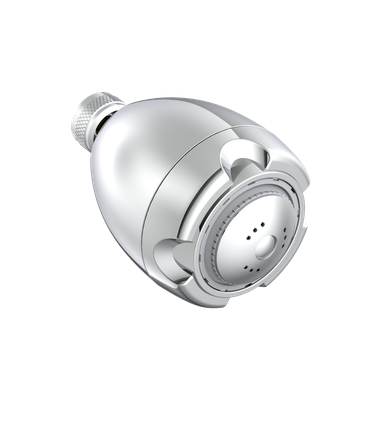
Adjustable heads let each person change the spray from a wide pattern to a narrower, stronger one. That helps when a single head has to please a lot of different people, like in hotels, short-term rentals or shared housing. The Conserve Smart NaturaFlow line is WaterSense labeled and comes in 1.25, 1.5, 1.75 and 2.0 gpm versions.
Rain Showerheads
Rain heads spread water over a wide face for a gentle, drenching feel. At low flow rates that wide spread can feel light, so pick a model built for low flow rather than a standard rain head with a restrictor added. The Conserve Smart Rainfall LuxeFlow 1.5 gpm and the Niagara Rainfall Spa 2.0 gpm are two options.
Fixed, Handheld and Combination Showerheads
Fixed Showerheads
Fixed heads mount directly to the shower arm. They're the simplest and cheapest option, have the fewest parts to break and are the standard choice for most units.
Handheld Showerheads and ADA Requirements
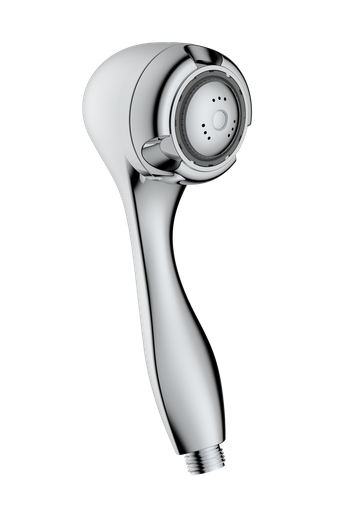
Handheld heads make sense in senior living, healthcare, accessible units and anywhere people need to rinse off while seated. For accessible showers, the 2010 ADA Standards call for a hand-held spray unit with a hose at least 59 inches long that can also be used as a fixed showerhead, along with an on/off control. Many of our handhelds are listed as ADA compliant, including the Niagara Earth Massage handheld (N2945CH) and the Conserve Smart NaturaFlow handheld (CMHH150). You'll find the full lineup in our handheld showerheads category.
Combination Kits and Shower Rails
Combination kits pair a fixed head and a handheld with a diverter, so the same shower works for everyone in the unit. The High Sierra 1.5 gpm combination kit is one example. Slide bar setups like the Niagara ShowerRail kit let people set the handheld at whatever height works for them.
Features for Multifamily, Hospitality and Commercial Properties
Tamper-Proof Showerheads
In dorms, rentals and short-term housing, people sometimes pull the restrictor or replace the head with their own. Tamper-proof models need a special tool to remove, which protects your savings and keeps you in line with local limits. The Niagara Earth 1.5 gpm tamper proof (N2915CH-TP) and the Conserve Smart CMTP150 are both built for this.
Thermostatic Shut-Off Valves
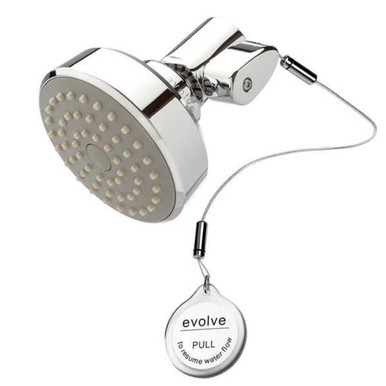
A lot of hot water is wasted before anyone steps into the shower. Evolve's ShowerStart heads slow the water to a trickle once it reaches temperature, so it isn't running down the drain while someone finishes brushing their teeth. Pulling the cord restarts full flow. See the Evolve 1.5 gpm with ShowerStart (EV3021).
Pause Valves
A pause valve lets someone cut the water while they lather up and then bring it back at the same temperature, without fiddling with the shower handle. The Niagara Earth 1.5 gpm with pause valve (N2915C-V) has one built in.
Materials and Finishes
Plastic heads keep costs down for large rollouts. All-metal heads, like the High Sierra classic handheld, cost more but tend to stand up better in high-traffic or high-abuse settings. Chrome is the standard finish, and several lines also come in brushed nickel or matte black if you need to match existing fixtures.
Installing and Maintaining Low Flow Showerheads
Installation
Standard U.S. shower arms use a 1/2-inch thread, so most heads swap in without any plumbing changes. Unscrew the old head, wrap the arm threads with thread seal tape and hand-tighten the new head. If you need a wrench, wrap the finish with a cloth first so you don't scratch it. Tamper-proof heads come with their own installation tool, so keep a few on the maintenance cart.
Cleaning Mineral Buildup
Hard water leaves deposits that clog nozzles, and on a low flow head that can cut flow even further. Soaking the face in white vinegar for an hour or so loosens most buildup. Many heads have soft rubber nozzles you can rub clean with a finger. Adding a cleaning step to unit turnovers keeps complaints down.
Leave the Flow Restrictor in Place
Removing the restrictor pushes the head past its rating, which can break state or local limits and cancel any rebate or WaterSense claim tied to it. If people are pulling restrictors, that's a sign the head isn't right for your water pressure. Switching to a pressure-compensating or slightly higher flow model usually fixes it.
Buying Low Flow Showerheads in Bulk
Before a big order, buy a handful and install them in a few units with different water pressure, then ask residents or staff what they think. That's a lot cheaper than pulling hundreds of heads later. Once you've picked a model, buy by the case. Most of our standard heads ship in cases of 50, and handhelds usually come in smaller packs. Case pricing is lower, and you'll have spares for turnovers and repairs.
Using the same head across a building keeps maintenance simple and gives everyone the same shower. A showerhead swap is also a natural time to change out faucet aerators, and for a lot of units at once our water conservation kits package a showerhead, aerators and other savers in one box. Many water and energy utilities also run rebate or giveaway programs for efficient showerheads, so it's worth checking with yours before you buy.
We carry low flow showerheads from Niagara, Conserve Smart, BITS, Evolve, High Sierra, WaterPik and AM Conservation. For large orders, use the Volume Quote Request button on any product page or fill out our quote request form.
Low Flow Showerhead Buying Checklist
- Flow rate meets the strictest rule where you're installing
- WaterSense labeled
- Pressure-compensating if your water pressure varies
- Spray type that suits the people using it
- Handheld or ADA compliant models where needed
- Tamper-proof heads for high-turnover units
- Thermostatic shut-off or pause valve if hot water waste is a concern
- Tested in a few units before the full order
Low Flow Showerhead FAQs
Do low flow showerheads have good water pressure?
A well-designed one does. Look for WaterSense labeled heads, which are tested for spray force and coverage, and pressure-compensating models if your building's pressure is low or uneven. Most complaints about weak showers come from basic heads used in low-pressure buildings.
Is 1.5 gpm enough for a good shower?
For most people, yes. At 1.5 gpm a good aerating or adjustable head feels close to a standard shower while using 40% less water. If your building runs below about 40 psi, a 1.75 or 2.0 gpm head may be a better match.
What is the lowest flow showerhead available?
Fixed low flow heads commonly go down to 1.25 gpm. Some adjustable models go lower, like the Niagara Tri-Max, which has a 0.5 gpm setting. Very low settings work best for specific uses, such as rinsing, rather than as the everyday setting.
Can I remove the flow restrictor from a low flow showerhead?
You can physically remove most of them, but you shouldn't. It can put the head over legal flow limits in your state, void rebates and undo the savings you bought it for. If the flow feels too weak, a pressure-compensating head or a slightly higher flow rate is the better fix.
Are low flow showerheads required by law?
Every new showerhead sold in the U.S. has to meet the federal 2.5 gpm limit. Several states, including California, Washington and Hawaii, require 1.8 gpm, and others require 2.0 gpm. Local building codes and green building programs can add their own requirements.
Do utilities offer rebates for low flow showerheads?
Many water and energy utilities offer rebates or free efficient showerheads, often limited to WaterSense labeled models. Programs change often, so check with your local utility before placing a large order.
Working on water savings across a building? Our guides to fixing a leaking toilet tank and the benefits of water conservation kits cover the next places to look. Ready to compare models? Browse all of our low flow showerheads.