
Description
Product Features:
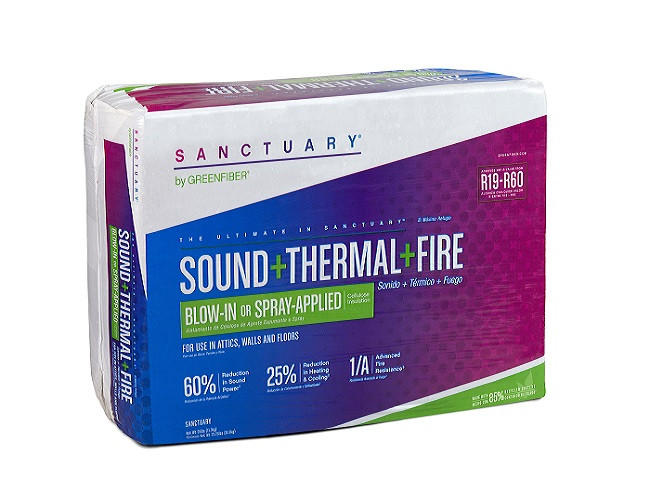
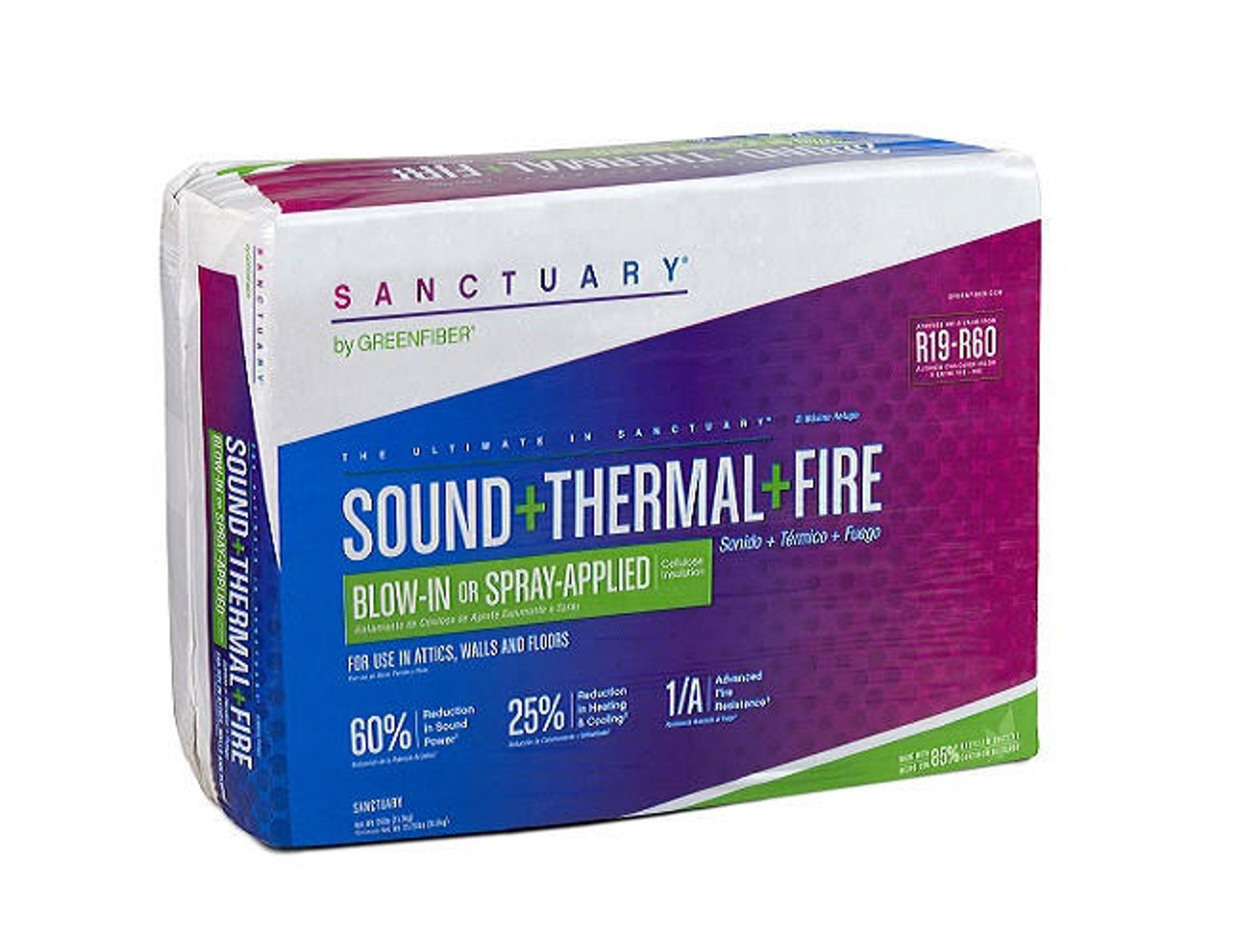
Sanctuary is engineered to fill tiny crevices and gaps, creating a dense, scientifically advanced barrier capable of reducing the power of sound by up to 60%¹. As cellulose insulation that can be blown-in or spray-applied, Sanctuary can be easily installed over existing insulation, and unlike batt or roll alternatives, it is engineered to fill every gap, void and hard-to-reach place without time-consuming cutting and fitting. Installed in attics, walls, ceilings and floors, Sanctuary keeps homes cooler in the summer and warmer in the winter, reducing heating and cooling costs by up to 25%2. Sanctuary has a Class 1/A fire rating, qualifies as a fire-blocking material and has been proven to be 57% better at resisting fire than most other common type of residential insulation.
Product Specifications:
- 60% reduction in sound power
- 25% reduction in heating and cooling costs
- 85% recycled material
- Coverage Area (Sq. Ft.): 48.8 at R-19
- Package Weight (lbs.): 25
- Energy Star certified
- Formaldehyde free
- Limited lifetime warranty
- R-Value per Inch: 3.7
- Insulation Type: Cellulose
- Fits any wall configuration
- For use in attics
- For use in ceilings
- For use in crawlspaces
- For use in floor
Benefits of Using Greenfiber Sanctuary® Cellulose Insulation
Sanctuary cellulose insulation does a strong job of tightening up the building envelope. When it’s dense-packed into wall cavities or blown into attic spaces, it fills gaps, seams, and irregular areas that other materials tend to miss. That tighter fit cuts down on uncontrolled airflow, which helps stabilize indoor temperatures and reduces how hard your HVAC system has to work.
It also brings a clear sustainability angle to the table. Cellulose insulation is primarily made from recycled paper fibers, so it diverts waste from landfills while giving you a high-performing insulation product. For businesses tracking environmental impact or working toward green building certifications like LEED, that recycled content can support broader sustainability goals.
Fire resistance is another built-in advantage. Sanctuary cellulose is treated with borate compounds, which help slow flame spread and limit combustion. That added layer of protection can improve overall building safety and align with fire code requirements without needing additional materials.
There’s also a noticeable benefit when it comes to sound control. The dense composition of cellulose helps absorb airborne noise, which makes a difference in offices, multifamily buildings, and mixed-use spaces. It can reduce sound transfer between rooms and floors, creating a quieter and more comfortable environment.
From a performance standpoint, cellulose holds its own in terms of thermal resistance while delivering more consistent coverage than many traditional insulation types. By reducing heat loss in the winter and heat gain in the summer, it helps lower energy consumption over time. That translates into real cost savings on utilities, especially across larger commercial properties where small efficiency gains add up quickly.
Installation Requirements
Installing Sanctuary cellulose insulation starts with using the right equipment. This isn’t a hand-install material. It requires a professional-grade blowing machine to achieve the proper density and coverage, especially for dense-pack wall applications. Getting that density right matters, since under-packed cellulose can settle over time and leave gaps that hurt performance.
Surface prep plays a big role in how well the insulation performs. Before installation, cavities should be sealed up as much as possible with air sealing measures like caulking, foam, or gaskets around penetrations. Cellulose works best as part of a system, not on its own. Tightening up the building envelope first helps the insulation do its job more effectively.
Moisture control needs to be accounted for during planning. While cellulose can manage small amounts of moisture, it should not be installed in areas with active leaks or high humidity without proper mitigation. In some assemblies, a vapor barrier or vapor retarder may be required depending on climate zone and building code requirements.
Access and application method will vary based on the project. Open attics are typically handled with loose-fill installation for fast, even coverage, while enclosed wall cavities require dense-pack techniques using insertion tubes or netting systems. Retrofit projects may involve drilling and filling existing walls, which requires careful patching afterward.
Code compliance and safety standards should always be part of the install plan. Sanctuary cellulose insulation is designed to meet industry standards like ASTM International specifications, but installation still needs to align with local building codes and manufacturer guidelines. Following those requirements ensures the insulation performs as expected and avoids issues during inspections.
Dense Pack vs Loose Fill Cellulose
Dense pack and loose fill cellulose are two installation approaches that serve different parts of a building, and choosing the right one comes down to how the space is constructed. Dense pack cellulose is typically used in enclosed wall cavities, where the material is blown in at a higher pressure to create a tightly packed fill. That higher density helps lock the insulation in place, reduce air movement, and prevent settling over time. It’s a go-to option for exterior walls, retrofit projects, and any area where air sealing is a priority.
Loose fill cellulose is designed for open areas, most commonly attics. Instead of packing the material tightly, it’s blown in to create an even layer across horizontal surfaces. This method allows for fast coverage and makes it easy to hit target R-values by adjusting the depth of the insulation. It’s especially useful when topping off existing insulation or bringing older buildings up to current energy standards.
From a performance standpoint, both methods deliver strong thermal resistance, but they behave a little differently. Dense pack focuses more on air control within vertical assemblies, while loose fill is all about consistent coverage across large, open spaces. In many projects, both methods are used together to fully insulate the building envelope, with dense pack in the walls and loose fill in the attic to create a more complete and efficient system.
Frequently Asked Questions About Sanctuary Cellulose Insulation
What makes Sanctuary cellulose insulation different from fiberglass?
Sanctuary cellulose insulation conforms tightly to cavities and fills small gaps that fiberglass often leaves behind. That tighter fit reduces airflow through the building envelope, which improves overall energy performance and indoor comfort.
How long does cellulose insulation last once it’s installed?
When installed at the correct density and kept dry, cellulose insulation can perform for decades. It doesn’t break down quickly, and dense-pack applications are designed to resist settling over time.
Is Sanctuary cellulose insulation safe for commercial buildings?
Yes, it’s treated with borate compounds that provide fire resistance and help deter pests. It also meets standards set by organizations like ASTM International, making it suitable for both residential and commercial use.
Can cellulose insulation be added to an existing building?
It’s commonly used in retrofit projects. Contractors can drill into wall cavities or blow material into attics without major demolition, making it a practical option for improving insulation in older buildings.


